

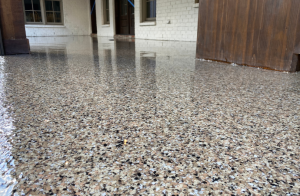
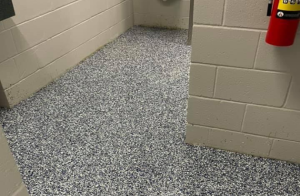
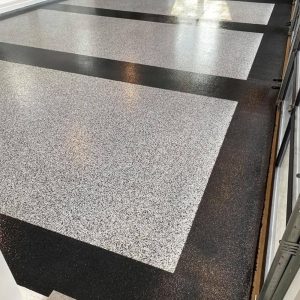
What Are Flake Epoxy Floors?
Flake epoxy floors are a heavy-duty flooring system used in garages, patios, porches, pool decks, and other high-traffic areas. Colored flakes are mixed into several layers of epoxy to create a thick, textured floor that holds up to everyday wear and tear. A properly installed flake system uses multiple layers and a heavier flake concentration than standard epoxy coatings, which is part of what gives it a deeper finish and longer lifespan.
Where Flake Epoxy Floors Work Best
This type of coating is commonly used in:
- Garages
- Patios and porches
- Commercial subfloors
- Workshops and utility areas
- Pool decks
Because it’s designed to resist heat, chemicals, moisture, and abrasion, it can be used both indoors and out.
Key Features & Benefits
Flake epoxy floors are built around a few core performance qualities:
- Long-term use and wear and tear performance (often up to 25 years when properly installed)
- Resistance to hot tires and common chemicals like gasoline, oil, and antifreeze
- Waterproof, non-slip surface
- Textured, multi-layer flake finish
- UV stability, which helps prevent fading outdoors
- Low-maintenance, easy-to-clean surface
Compared to thinner, single-coat epoxy applications, flake systems are engineered to hold up longer under regular use.
How This System Differs From Basic Epoxy Coatings
The main difference between a flake epoxy floor and a standard epoxy coating comes down to layering. Flake systems use multiple coats and a heavier volume of flakes to build thickness and texture. This layering process affects how well the floor resists impact, chemical exposure, and everyday wear and tear over time.
How Flake Epoxy Floors Are Installed
Flake epoxy floors are typically installed directly over existing concrete, which is ground or prepped first to help the epoxy bond properly. In most cases, the process takes 1–3 days from start to finish, depending on the size of the area and the number of coats applied. Because each layer needs time to cure before the next one goes on, rushing the process can affect how well the floor performs long-term.
DIY vs. Calling a PRO
Flake epoxy systems are more involved than a basic epoxy coat, largely due to the layering and curing process. It’s worth calling your PRO instead of handling it yourself when:
- The floor will see heavy use (garages, workshops, commercial spaces)
- Long-term performance is a priority
- The concrete has cracks, moisture issues, or old coatings that need to be removed
- The goal is a full multi-layer flake finish rather than a thin, single-coat look
Because flake floors depend on precise layering and proper cure times, installation quality has a direct impact on how the floor performs over the years.
If you’re not sure whether your existing concrete floor is a good candidate or want to talk through what a flake epoxy floor might look like or how it will perform., we’re happy to help. Reach us at 601-906-0699
Questions and Answers
Q: How long do flake epoxy floors typically last?
A: With proper installation, these floors can perform and look great up to 25 years.
Q: Will hot tires damage the floor?
A: Flake epoxy systems are generally designed to resist hot tire pickup, along with exposure to gasoline, oil, and antifreeze.
Q: Can flake epoxy floors be used outdoors?
A: Yes, when a UV-stable topcoat is used, which helps prevent fading from sun exposure over time.
Q: Is this type of floor slippery when wet?
A: No — the textured, multi-layer flake finish is designed to improve slip resistance, even in wet conditions like poolside areas or garages.
Q: Can flake epoxy floors be installed over any flooring material besides concrete?
A: Generally, no — flake epoxy floors are designed to bond with concrete, not with other flooring materials. If a space currently has tile, vinyl, wood, or another surface, that material typically needs to be removed down to the bare concrete slab before installation can begin. Epoxy needs a porous surface to properly bond to, which is why prep work (grinding or shot-blasting the concrete) is such an important step.