

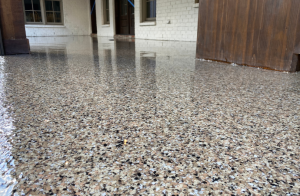
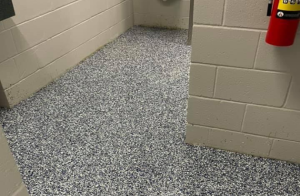
Epoxy countertops have been quietly making their way out of industrial settings and into kitchens, bathrooms, and breakrooms — and the results, when done right, are genuinely impressive. But there’s a lot of conflicting information out there about what epoxy countertops actually are, how they hold up, and whether they’re worth it. Let’s clear that up.
What Is an Epoxy Countertop?
Epoxy countertops come in two forms: a full cast countertop made entirely from epoxy resin, or an epoxy coating applied over an existing surface like concrete, wood, laminate, or tile. Both approaches can produce a stunning result — smooth, seamless, and available in a huge range of colors and effects, including stone-like patterns, solid colors, and even metallic finishes.
The coating approach is particularly popular because it can completely transform a countertop that’s structurally fine but visually tired. Instead of a full replacement, you’re refreshing what’s already there.
Why People Are Choosing Epoxy
The appeal is easy to understand. Epoxy creates a seamless, non-porous surface — no grout lines, no seams, no places for bacteria or moisture to hide. In kitchens and breakrooms especially, that’s not just an aesthetic win, it’s a practical one.
The customization factor is another big draw. Whether you’re going for a marble-look finish, a dramatic solid color, or something more abstract and artistic, epoxy can get you there. At 33 Dreamcrete, we’ve done countertops that people genuinely mistake for natural stone — and ones that look like nothing else on the market.
Cost is also a factor. A full countertop replacement in natural stone or quartz can run well into the thousands. Epoxy coating gives you a high-end look at a fraction of that investment, which makes it attractive for both home renovations and commercial refreshes where budget matters.
How Durable Are Epoxy Countertops, Really?
This is where honesty matters. Epoxy countertops are durable — but they’re not indestructible, and they have specific vulnerabilities worth knowing about before you commit.
Heat is the main one. Epoxy can yellow or warp if hot pans are placed directly on the surface. Trivets and hot pads aren’t optional — they’re necessary. This is true whether the countertop is in a home kitchen or a commercial food prep area. To be fair, heat is also an issue for other types of countertops like laminate or quartz.
UV exposure is another factor. In spaces with significant direct sunlight, some epoxy formulas can yellow over time. Using a UV-resistant topcoat addresses this, and it’s something any experienced installer should be building into the process.
Scratching is less of a concern than most people expect — epoxy holds up well to normal use — but cutting directly on the surface isn’t recommended. Again, that’s true of most countertop materials.
Common Mistakes That Lead to Bad Results
The biggest issue we see is improper surface prep. Epoxy bonds to the existing surface, which means any grease, residue, or instability underneath will eventually show up in the finished product. Thorough cleaning, sanding, and priming aren’t shortcuts — they’re the foundation.
Mixing ratios matter enormously too. Epoxy is a two-part system, and getting the ratio wrong leads to a surface that never fully cures. This is one of the main reasons DIY epoxy countertop projects go sideways. The margin for error is narrow, and the consequence of getting it wrong is a sticky, soft surface that has to be removed and redone.
Rushing the cure time is another common mistake. Epoxy needs time — and the right temperature conditions — to cure properly. Using a countertop too soon or working in conditions that are too cold or too humid can compromise the entire finish.
What the Process Actually Looks Like
A professional epoxy countertop installation starts with surface prep — cleaning, repairing any damage, and ensuring the substrate is solid and ready to bond. From there, a primer coat goes down, followed by the epoxy layers, which are where the color and design come to life. A clear topcoat seals everything and adds the final level of protection.
The timeline from start to usable surface is typically a few days when cure time is factored in. It’s not a same-day project, but the results are worth the patience.
Throughout the Jackson area, we’re seeing this process applied to everything from residential kitchen islands to commercial reception desks — and the finished surfaces consistently surprise people who weren’t sure what to expect.
Is an Epoxy Countertop Right for Your Space?
If your current countertop is structurally sound but you’re ready for a change, epoxy coating is absolutely worth exploring. If you’re building something from scratch and want a completely custom look, cast epoxy countertops offer a level of personalization that’s hard to match with conventional materials.
The key is to go in with realistic expectations — know the maintenance requirements, protect against heat, and have the work done by someone who understands the material. When those boxes are checked, epoxy countertops deliver a surface that looks exceptional and holds up to real life.
If you’re not sure whether your existing countertop is a good candidate or want to talk through what a custom finish might look like, we’re happy to help. Reach us at 601-906-0699
FAQs
- Can epoxy be applied over existing countertops? Yes — epoxy can be applied over concrete, wood, laminate, tile, and other surfaces as long as they’re structurally sound and properly prepped beforehand.
- How long do epoxy countertops last? With proper care and a quality topcoat, epoxy countertops can last 10 years or more. Avoiding direct heat and using cutting boards will significantly extend the life of the surface.
- Are epoxy countertops food safe? Once fully cured, epoxy creates a non-porous, food-safe surface. The key word is fully cured — using the surface before it’s completely hardened is where issues arise.
- Can epoxy countertops look like marble or stone? Absolutely. Vein patterns, stone-like color blends, and high-gloss finishes can mimic natural stone convincingly — often at a significantly lower cost.
- Why did my DIY epoxy countertop not cure properly? The most common causes are incorrect mixing ratios, working in temperatures that are too cold or too humid, or applying coats that are too thick. Professional installation eliminates most of these variables.